Academic research is rapidly evolving beyond the strict traditional borders of single-subject university departments. Today, the most groundbreaking discoveries happen when experts from completely different fields combine their unique knowledge and methodologies. Embracing interdisciplinary co-authorship is now the standard for modern scholars who want to publish in high-impact journals and solve complex global problems. Breaking out of your academic silo is absolutely essential for staying relevant in a highly competitive scientific landscape.

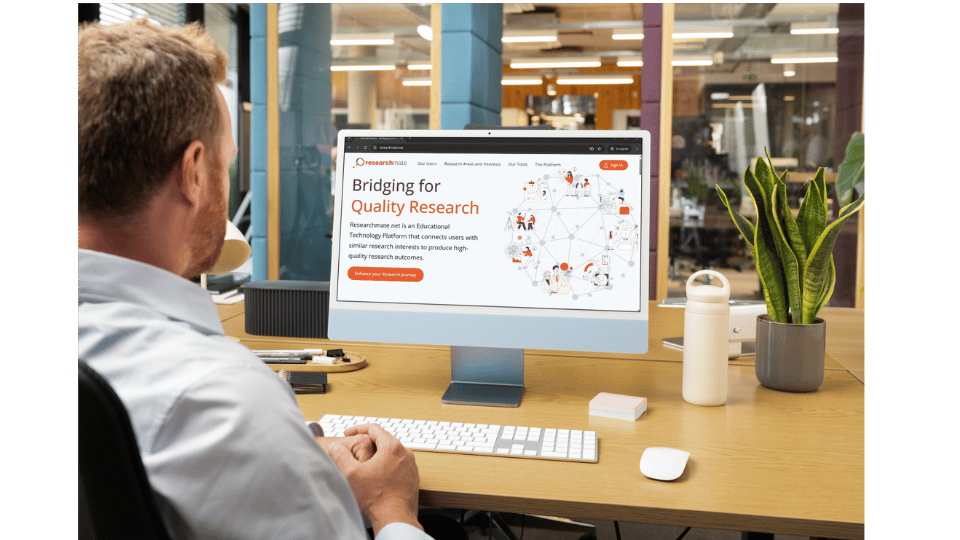
Many talented researchers desperately struggle to find the right experts outside of their immediate academic circles. Relying solely on your local university departments limits your potential to innovate and produce truly transformative, world-changing data. Fortunately, modern tools like ResearchMate eliminate these geographical and disciplinary barriers to help you connect with global experts effortlessly. This powerful platform makes interdisciplinary co-authorship accessible to absolutely anyone willing to expand their scholarly horizons and embrace new methodologies.

Modern problems like climate change and global health crises simply cannot be solved by a single academic discipline. By engaging in interdisciplinary co-authorship, researchers can merge insights from medicine, data science, and environmental studies to create holistic solutions. Combining diverse analytical frameworks leads to much stronger methodologies that traditional peer reviewers consistently reward and praise. You can easily begin this collaborative journey by reading about the importance of co-authorship to understand its massive global impact.
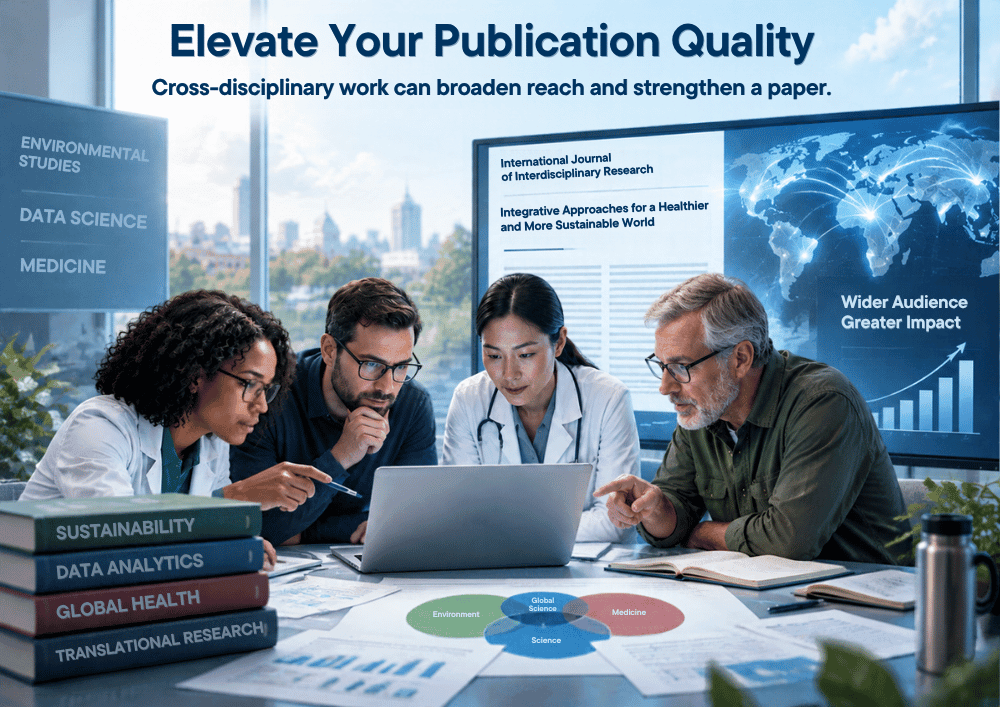
Journals with the highest impact factors actively seek out dynamic papers that bridge multiple scientific domains simultaneously. When you leverage interdisciplinary co-authorship, your final manuscript instantly appeals to a much broader and more engaged academic audience. Editors strongly favor studies that demonstrate comprehensive teamwork because they predictably generate higher citation rates and public interest. If you want to speed up this exciting process, you can learn how to accelerate research publication with Researchmate seamlessly today.

Finding the perfect balance of unique skills is critical when you are venturing into uncharted academic territory. A successful project always requires assembling a research dream team where every member brings a highly specialized skill set to the table. Researchmate’s matching algorithm pairs you with complementary experts who perfectly fill the exact knowledge gaps in your current study. This amazing technology ensures your interdisciplinary co-authorship efforts are built on a solid foundation of mutual expertise and shared goals.

The most famous scientific breakthroughs of our modern era heavily relied on merging completely different scientific fields. A perfect example of this phenomenon is the John Jumper and Geoffrey Hinton successful story on research collaborations, which brilliantly blended artificial intelligence with complex biology. Studying these historical collaborative wins provides a proven blueprint for structuring your own cross-disciplinary projects effectively and efficiently. Their legacy proves that interdisciplinary co-authorship is the absolute key to unlocking prestigious scientific awards and massive global recognition.

Attending annual academic conferences used to be the only viable way to meet potential partners from other university departments. Unfortunately, this outdated method is often incredibly expensive, highly time-consuming, and heavily reliant on sheer luck rather than data. Comparing traditional networking vs Researchmate reveals that digital platforms offer a much smarter, data-driven approach to finding valuable partners. Using AI to match specific research interests guarantees better connections, making interdisciplinary co-authorship significantly easier than ever before.

Connecting with a foreign researcher whose working style perfectly matches your own can feel like finding a needle in a haystack. Thankfully, the intuitive process of finding your Researchmate takes the stressful guesswork completely out of the equation. The platform analyzes your specific academic needs to introduce you to dedicated scholars who share your exact research vision. This highly targeted matchmaking is precisely what makes successful interdisciplinary co-authorship a daily reality rather than just a hopeful dream.

Grant committees and international funding agencies are increasingly prioritizing projects that demonstrate extensive cross-departmental teamwork and diverse perspectives. To secure research grants, it is painfully obvious that collaborative proposals win much more funding. Review boards desperately want to see diverse expertise because it significantly lowers the risk of project failure and broadens the study’s impact. Engaging in interdisciplinary co-authorship clearly signals to these financial agencies that your research team is highly capable and thoroughly well-rounded.

Before you can attract top-tier partners from other scientific fields, you must clearly showcase your own unique expertise online. You must proactively build a strong academic researcher profile so that potential collaborators understand exactly what immense value you bring. A detailed and professional digital profile acts as a magnet for high-quality professional connections across various scientific disciplines. Once your online presence is fully optimized, inviting others into a mutually beneficial interdisciplinary co-authorship arrangement becomes an incredibly smooth process.

Working closely with experts from different fields means you will inevitably encounter different departmental cultures and publication expectations. To maintain a healthy working relationship, you must actively avoid authorship disputes from the very beginning of the project. Setting crystal clear expectations and writing formal agreements early prevents miscommunications from ruining your hard work down the line. Transparent, honest communication is the absolute backbone of any highly successful interdisciplinary co-authorship endeavor.

When a software engineer collaborates with a medical doctor, determining who officially owns the resulting technology can become quite complicated. It is vital to properly manage intellectual property in research collaborations to protect everyone’s original contributions and future profitable patents. Drafting a comprehensive data-sharing plan protects all parties and completely ensures that academic credit is distributed fairly and legally. Handling these legalities professionally makes interdisciplinary co-authorship a safe, secure, and highly rewarding experience for all involved researchers.
Starting a brand new scientific study from scratch with a complete stranger can feel incredibly overwhelming and logistically difficult. However, when you create a new project using AI tools on ResearchMate, the initial setup process becomes entirely effortless. Smart project management tools keep interdisciplinary teams perfectly organized, ensuring that crucial milestones are met across different global time zones. This advanced technological support takes the administrative burden off your shoulders, allowing you to focus entirely on your interdisciplinary co-authorship goals.
In massive cross-disciplinary studies, not everyone who provides minor data qualifies for full academic authorship on the final published paper. Understanding the strict, ethical differences in authorship versus contributorship helps you assign proper credit based on actual, measurable academic input. Adhering closely to ethical publication guidelines builds immense trust among your diverse team members and rigorously protects your professional reputation. Mastering this crucial distinction is a mandatory skill for anyone managing a complex, fast-paced interdisciplinary co-authorship team.
Publishing a peer-reviewed paper with international colleagues from different disciplines exposes your hard work to entirely new academic audiences. You will quickly see how research collaboration and co-authorship improve academic visibility and reputation across multiple scientific networks simultaneously. Your overall citation count will naturally multiply as your work is enthusiastically shared within the respective circles of all your co-authors. This compounding effect of interdisciplinary co-authorship is exactly how obscure researchers rapidly become globally recognized and respected thought leaders.
Finding truly original researchers is tough, and many generic platforms severely struggle to verify the true expertise of their users. Discovering the ways ResearchMate co-author beats traditional similarity checks ensures you are working only with authentic, highly vetted academic professionals. Relying on advanced proprietary algorithms prevents fraudulent partnerships, strictly keeping your academic integrity completely intact throughout the entire collaborative process. This incredibly high level of security gives you ultimate peace of mind while engaging in ambitious interdisciplinary co-authorship projects.
You absolutely do not need to be securely employed by a prestigious Ivy League university to participate in groundbreaking scientific discoveries. Learning how to publish a paper without an academic affiliation powerfully empowers independent researchers to actively contribute to major global studies. Researchmate democratizes the rigid scientific process by valuing actual skills over institutional titles, opening massive doors of opportunity for everyone. This wonderfully inclusive environment is where the true, unbiased spirit of interdisciplinary co-authorship genuinely thrives best.
Breaking completely out of traditional academic silos is no longer just a fun option; it is a strict requirement for global scientific advancement. By cleverly leveraging powerful networking platforms like ResearchMate, you can effortlessly find the exact experts you need to elevate your brilliant work. Embracing these diverse, cross-disciplinary partnerships will instantly transform your career trajectory and lead to highly cited, incredibly impactful publications. Start your exciting journey into interdisciplinary co-authorship today and enthusiastically watch your ultimate academic dreams finally become a reality.








1 Comments