The sudden departure of a crucial co-author can instantly turn a promising project into an orphaned manuscript. When key researchers abruptly leave academia, the remaining team often loses access to raw data right before a major revise and resubmit phase. Without these vital files, satisfying peer review demands becomes an ethical and logistical nightmare. An effective Academic Data Succession Plan prevents this paralysis by securing data continuity from day one.

Anticipating worst-case scenarios is essential for professional research teams. A robust Academic Data Succession Plan establishes centralized repositories and clear continuity clauses long before a crisis hits. By knowing what to do when research collaborations fail, co-authors can legally protect their shared knowledge. This proactive approach guarantees that years of hard work are never lost to academic attrition.
It is vital to accept that life events can unexpectedly pull key researchers away from academia. Whether it is a sudden career shift or a health crisis, an Academic Data Succession Plan prepares the team for these shocks. Preparing in advance prevents the panic that ensues when a crucial team member permanently loses their institutional access. This proactive mindset is the foundation of protecting your manuscript’s future.

Relying on a personal hard drive is a guaranteed recipe for disaster in collaborative projects. Your Academic Data Succession Plan must mandate the use of a secure, cloud-based institutional repository. This ensures that all raw files and statistical scripts remain fully accessible to the surviving team. When everyone can reach the data, the manuscript never truly becomes orphaned.
At the very beginning of your project, the team should collectively sign a continuation clause. This formal agreement sits at the heart of any effective Academic Data Succession Plan. It clearly outlines who will legally assume the data stewardship if a key member vanishes. Having this clause in writing helps to avoid authorship disputes when emotions are running high.
When a primary contributor leaves unexpectedly, the burden of final revisions falls on the remaining members. A comprehensive Academic Data Succession Plan must explicitly state who takes over first-author duties. This reassignment ensures that someone is officially responsible for answering the peer reviewers. Clearly defining these roles saves the manuscript from lingering indefinitely in publication limbo.

Untangling another researcher’s messy code is one of the biggest hurdles during a revise and resubmit phase. Your Academic Data Succession Plan should include strict guidelines for standardizing data formats and annotating scripts. When everyone uses a shared coding language, re-running massive data sets becomes a manageable task. This simple habit allows any remaining teammate to pick up exactly where the departed author left off.
Handling the data of a former colleague requires a careful approach to legal ownership and usage rights. An effective Academic Data Succession Plan clearly navigates these murky legal waters before they become problematic. By proactively discussing intellectual property in research collaborations, the team avoids being ethically paralyzed. Clear IP agreements empower the remaining authors to confidently submit their revised manuscript.
Frequent team meetings ensure that no single person hoards all the critical project knowledge. An active Academic Data Succession Plan incorporates weekly or bi-weekly syncs to share methodological updates. This guarantees that at least two people understand the complex data structures at all times. Regular communication minimizes the shockwaves if an essential author abruptly leaves the academic world.
Every critical dataset must have a primary owner and a designated backup manager. Including a secondary steward in your Academic Data Succession Plan provides an immediate fail-safe for unexpected absences. This backup person holds the administrative keys to the shared repository and institutional ethics approvals. Having a dedicated backup completely eliminates the bottleneck caused by a bouncing university email address.
Ethics approvals are often tied to the principal investigator or a specific lead author. Your Academic Data Succession Plan needs a strategy to quickly transfer IRB protocols if that person leaves. Failing to update ethical oversight can permanently halt your data re-runs during the review process. Pre-planning this administrative transfer ensures your team remains fully compliant with university regulations.
The revise and resubmit phase is incredibly stressful, especially when reviewers demand entirely new statistical models. Having an Academic Data Succession Plan in place gives the remaining team the tools to push forward. It teaches you how to effectively handle peer review rejection without the original architect of the study. This resilience is what ultimately transforms an orphaned manuscript into a published paper.
Modern research requires modern tools that go beyond simple email attachments and private folders. Integrating specialized platforms into your Academic Data Succession Plan streamlines the transition of responsibilities. When exploring ways to improve teamwork, you might want to choose the right research partner or co-author who values transparency. These platforms keep the workflow visible and accessible to everyone involved in the study.
Every folder in your shared repository needs a detailed text document explaining its contents. Your Academic Data Succession Plan should mandate a living Readme file that tracks version history and file locations. This document acts as a map for the surviving researchers when they face complex data demands. A well-maintained Readme is often the only thing standing between a successful revision and a dead project.
When a researcher leaves, their previous contributions still deserve proper recognition and citation. A thoughtful Academic Data Succession Plan dictates how to appropriately credit authors who cannot participate in final revisions. Teams must understand how to avoid ghost or gift authors in co-authorship while updating the author list. Transparently communicating these changes to journal editors protects the integrity of the entire research team.
If a corresponding author vanishes, you must immediately inform the editorial board of the situation. Your Academic Data Succession Plan should outline a script for explaining the sudden change in team dynamics. Transparency helps editors understand why there might be a slight delay in the peer review process. Honest communication maintains your academic reputation while you secure access to the orphaned files.
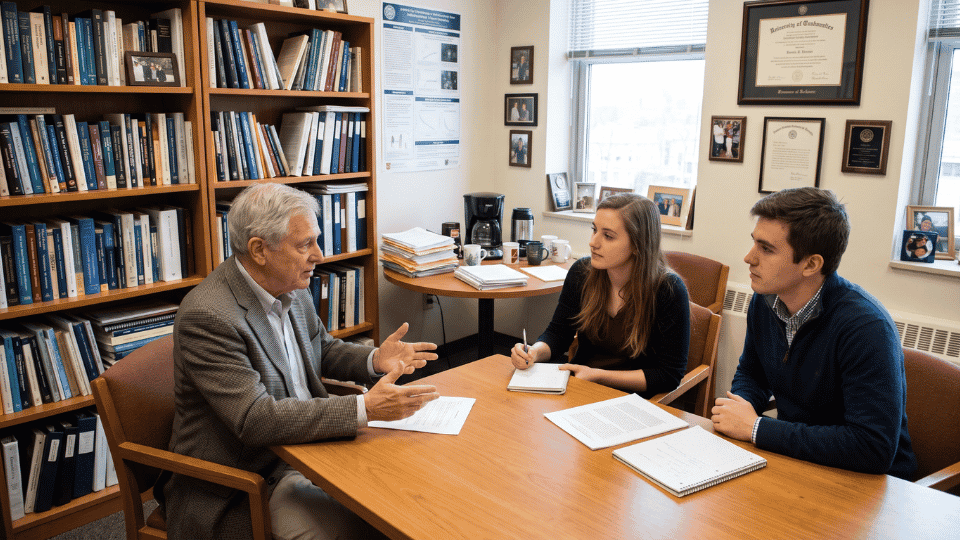
Navigating the loss of a key team member is a daunting task for junior researchers and graduate students. An Academic Data Succession Plan often includes consulting experienced faculty to help mediate the transition. If you are struggling, finding senior co-authors to provide administrative advice can be a lifesaver. Their seasoned perspective can help unlock institutional barriers and guide the manuscript to publication.
The tragic loss or sudden departure of a brilliant co-author should never mean the end of your shared research. By implementing a rigorous Academic Data Succession Plan, you protect the collective effort and intellectual property of your team. This structured approach removes the anxiety of relying on a single point of failure. Data stewardship becomes a shared responsibility rather than a personal burden.

Ultimately, academic attrition is an unpredictable but inevitable part of the modern research landscape. A well-designed Academic Data Succession Plan ensures that peer reviewers get their answers and the science moves forward. Teams that prepare for these disruptions are far more likely to successfully navigate the demanding R&R process. Safeguarding your files today guarantees your manuscript’s publication tomorrow.
Take the time to sit down with your collaborators and draft a continuation clause before collecting your first data point. Your Academic Data Succession Plan will serve as a vital safety net when unexpected crises arise. By establishing secure repositories and clear leadership roles, your orphaned manuscripts will finally find their way home. Protect your academic legacy by planning for the unexpected right from the start.