In today’s fast-paced construction landscape, precision, sustainability, and collaboration are key. The emergence of building information modeling softwares has reshaped how architects, engineers, and contractors plan, design, and execute projects. These advanced tools go far beyond conventional CAD systems, offering integrated 3D modeling, data management, and real-time coordination that improve both quality and efficiency.
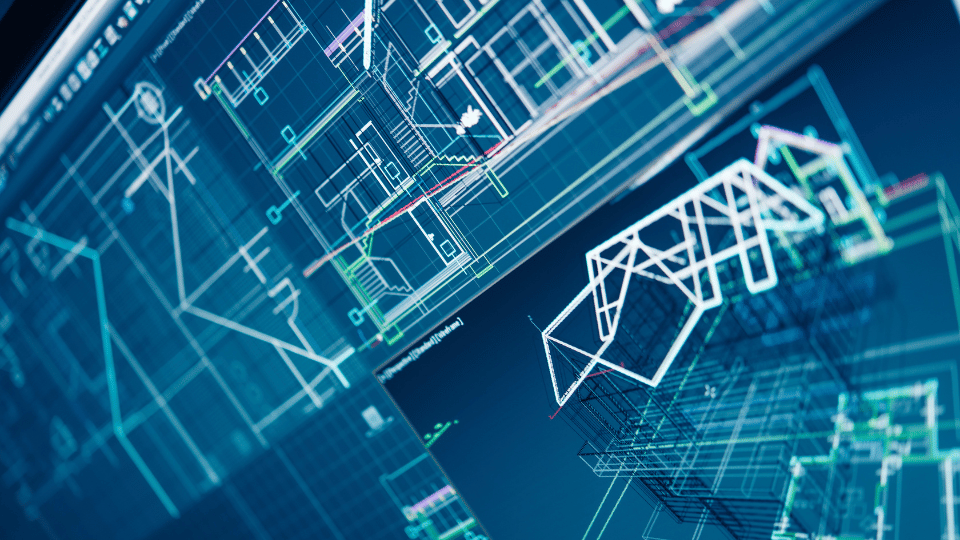
While the market offers a variety of options, not all BIM tools provide the same balance of flexibility and depth. This article explores the best building information softwares, highlighting their distinctive strengths, practical features, and use-case suitability for modern construction workflows.
Autodesk Revit remains the gold standard among building information softwares, widely adopted by firms worldwide for architectural design, MEP, and structural modeling. Revit’s parametric modeling system ensures that every change automatically updates across the model, eliminating redundant work and errors.

Its collaborative environment allows multidisciplinary teams to contribute simultaneously, while the cloud-based Autodesk Construction Cloud enhances coordination, analytics, and documentation control. For firms seeking a unified BIM ecosystem that scales across disciplines, Revit continues to be an unrivaled choice.
Graphisoft’s Archicad leads in usability and design visualization. Recognized for its intuitive interface, it empowers architects to develop detailed 3D models while maintaining performance even on complex projects.

A highlight of Archicad is its Open BIM interoperability, allowing effortless data sharing through IFC files. This ensures collaboration between professionals using different building information softwares, avoiding data silos. With powerful rendering and visualization tools, Archicad bridges creative design with technical precision.
Developed by Trimble, Tekla Structures stands out for its engineering-level accuracy. Unlike generic building information softwares, Tekla focuses on constructability; providing advanced tools for steel, concrete, and precast components.

Its clash-detection and quantity take-off features streamline decision-making during early design stages. The integration with Trimble Connect enhances cloud collaboration and version control, ensuring data consistency across large, multidisciplinary infrastructure projects.
Bentley’s OpenBuildings Designer (formerly AECOsim) is among the most sophisticated building information softwares for large-scale projects. Its strength lies in multi-disciplinary coordination, enabling teams to manage architecture, structure, and MEP systems within a single environment.

A notable feature is GenerativeComponents, which allows parametric and rule-based modeling for innovative design exploration. Integration with Bentley’s iTwin platform introduces digital twin capabilities, helping users monitor, simulate, and optimize performance throughout a building’s lifecycle.
Vectorworks Architect provides a balance between design creativity and BIM-compliant precision. Its Marionette visual scripting tool supports algorithmic and parametric workflows, making it a flexible option for creative studios.

Unlike rigid building information softwares, Vectorworks encourages experimentation without compromising on compliance with industry standards. It supports open-format collaboration with Revit and Archicad, maintaining consistency and accuracy across multiple software ecosystems.
Nemetschek’s Allplan continues to be a preferred choice for civil and structural engineers. It allows users to design reinforcement, perform quantity take-offs, and generate detailed documentation automatically.
Its Bimplus cloud environment enables simultaneous model access and version tracking. What makes Allplan stand out among building information softwares is its hybrid 2D/3D workflow support, providing a gradual transition for firms evolving from CAD-based processes toward full BIM adoption.
CYPE has earned increasing attention as one of the most advanced building information softwares that bridges BIM modeling with analytical engineering. Based in Spain and widely adopted across Europe, CYPE provides a modular suite covering architecture, structural design, HVAC, energy performance, acoustics, and project management.
Its standout feature is the CYPE Open BIM workflow, which allows engineers and architects to import IFC models from any BIM platform, run precise calculations, and then re-export enriched data back into the shared model. CYPE’s software suite, especially CYPECAD for structural analysis and CYPETHERM for energy efficiency, offers high-fidelity simulations that comply with international standards.
Unlike many building information softwares that focus mainly on visualization, CYPE emphasizes technical performance verification. Its open ecosystem makes it ideal for multidisciplinary teams seeking to unify design and engineering under one collaborative framework.
Although Trimble Connect is not a modeling tool itself, it plays an essential role within the ecosystem of building information softwares. Acting as a centralized coordination hub, it enables all project participants to access up-to-date information in real time.
Through its cloud interface, stakeholders can comment, track revisions, and integrate data from Revit, Tekla, and SketchUp models. By ensuring transparency and version consistency, Trimble Connect helps teams avoid rework and keep complex projects aligned with schedule and scope.
BricsCAD BIM offers a powerful alternative for teams familiar with AutoCAD. Combining a DWG foundation with BIM capabilities, it allows users to design freely while adding intelligent data layers over time.
The platform integrates AI-assisted tools for classifying building elements, detecting inconsistencies, and automating repetitive modeling tasks. Among building information softwares, BricsCAD stands out for its affordability and flexibility, making it suitable for small firms and educational institutions entering the BIM world.
The field of building information softwares continues to expand as technology advances. Each platform offers specialized strengths: Revit dominates multidisciplinary collaboration, Archicad champions intuitive design, Tekla ensures structural precision, OpenBuildings Designer excels in infrastructure management, and CYPE bridges BIM with technical analysis and sustainability modeling.
Choosing the right tool depends on a project’s scope, technical needs, and desired collaboration level. As digital transformation accelerates across the AEC sector, investing in reliable building information softwares is no longer optional, it’s essential for firms aiming to enhance accuracy, efficiency, and innovation.
By adopting these platforms strategically, professionals can create smarter, safer, and more sustainable projects that define the future of construction.