For decades, an academic’s identity was entirely tied to their institution. You were “Professor X from University Y.” But the academic job market has changed; it is more volatile, more competitive, and more transient. Relying solely on your current employer for your professional identity is a risky strategy. Today, successful scholars must cultivate strong academic personal branding that travels with them, ensuring they remain visible and relevant regardless of where their paycheck comes from.
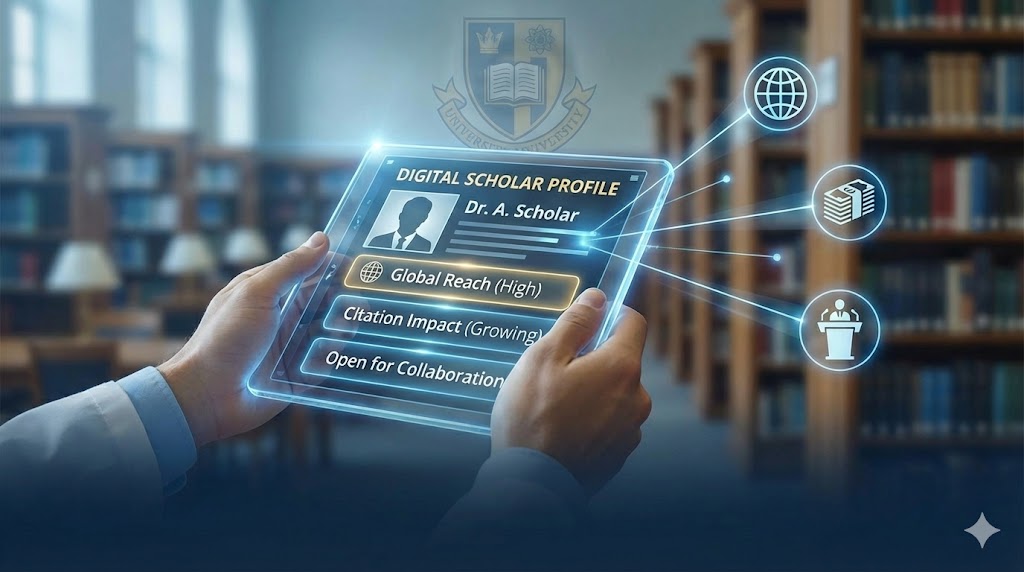
This shift towards individual branding empowers researchers to take control of their careers. Whether you are a PhD student, an adjunct professor, or an independent scholar, your reputation is your most valuable asset. A robust personal brand ensures that your work is visible to potential collaborators, grant committees, and employers, even if you are between contracts. Researchmate.net provides the ideal ecosystem to nurture this brand, connecting you with the global scientific community on your own terms.
While standard profiles like ORCID track your citations, true branding goes deeper. It is about defining who you are as a thinker and what unique value you bring to your field. Developing clear academic personal branding moves you from being just another name on a paper to becoming a recognized voice in your discipline. This article will guide you through the strategy of building a portable, professional identity that future-proofs your career.
The traditional Curriculum Vitae (CV) is a static document that sits in a drawer until you apply for a job. It does not work for you while you sleep. A personal brand, on the other hand, is a living, breathing representation of your expertise that is accessible 24/7. It showcases not just what you have done in the past, but what you are passionate about doing now.

When a potential collaborator searches for an expert in your field, they are looking for more than just a list of publications. They want to know your research philosophy, your current interests, and your willingness to collaborate. If your online presence is limited to a dry list of dates and titles, you are missing the human element that drives connection. Academic personal branding bridges this gap, turning a sterile record into a compelling narrative.
This is especially critical for early-career researchers. You may not have a long list of publications yet, but a strong brand can highlight your potential, your skills, and your ambition. This signals to mentors and peers that you are an active player in the field, attracting opportunities that a CV alone would miss.
Old-school networking was often about nepotism and physical proximity; collaborating with people down the hall because they were there. Digital branding breaks these physical barriers, allowing you to connect based on shared intellectual interests rather than geography. Researchmate’s algorithms match you with people who are looking for exactly the perspective you offer.

This creates a meritocratic environment where your ideas matter more than your university’s ranking. By refining your academic personal branding with specific keywords and project goals, you enable the system to bring opportunities to your doorstep. You stop chasing collaborations and start attracting them.
This stands in stark contrast to the closed loops of the past. As we explored in our comparison of traditional networking vs. Researchmate.net, the digital approach casts a much wider net. It exposes you to interdisciplinary opportunities that you would never encounter in your departmental tea room.
One of the growing demographics in academia is the independent scholar—researchers who are between posts, retired, or working in industry while researching on the side. For these individuals, an institutional email address is a luxury they often lack. A platform-independent profile is the foundation of academic personal branding because it provides a permanent home base that doesn’t expire when a contract ends.
This continuity is vital for maintaining long-term collaborations. If your contact details change every two years, you will lose touch with valuable colleagues. A permanent brand presence ensures that your network grows cumulatively throughout your career, rather than resetting with every job change.
This is a core component of the strategy for those wondering how to publish paper without academic affiliation. Your brand becomes your affiliation. It lends you the professional credibility needed to submit to journals and approach co-authors, proving that you are a serious researcher despite the lack of a university crest.
The ultimate goal of branding is to attract those rare collaborators with whom you have perfect synergy. These are the people who challenge you, support you, and make the work fun. Effective academic personal branding acts as a beacon for these individuals. By clearly stating your working style and values, you filter out incompatible partners before you even start.
Think of it as dating for intellectuals. You need to put your true self out there—your niche interests, your availability, your strengths—to find the right match. This is the philosophy behind finding your research soulmate with Researchmate.
When you treat your profile as a tool for connection rather than just a repository of facts, the quality of your matches improves. You start finding people who are passionate about the same obscure topics as you. These are the collaborations that lead to career-defining papers and lifelong friendships.
It is important to distinguish between a record of your work and a brand for your work. Tools like ORCID and Google Scholar are essential for tracking citations, as detailed in our guide on building a strong academic profile, but they are passive. They tell people what you wrote, but not who you are.
Academic personal branding on Researchmate allows for active engagement. It lets you post updates, request specific types of help, and signal your availability for grants. It turns the static data of your publication history into an active invitation to collaborate.
By combining the technical accuracy of standard identifiers with the dynamic engagement of a personal brand, you create a complete digital ecosystem. One validates your past; the other secures your future.
The academic landscape is shifting towards the “gig economy,” with more short-term contracts and project-based funding. In this environment, your personal reputation is your job security. Strong academic personal branding makes you head-hunted. It demonstrates that you are active, connected, and digitally literate.
Furthermore, grant committees are increasingly looking at the public engagement and network reach of applicants. Being able to show a diverse, international network built through your digital presence is a significant asset. It proves that you have the capacity to disseminate your research globally.
Investing time in your brand is investing in your future. It is an asset that appreciates over time as you add more connections and content. Don’t wait until you are desperate for a job to start building it.
Your research identity is too important to leave to chance or to the whims of an IT department. By proactively building your academic personal branding on Researchmate.net, you claim ownership of your professional narrative. You decide how the world sees you and who you want to work with.
The tools are there to help you expand beyond your local bubble. Whether you are looking for speed, funding, or just a friend in the lonely world of research, it all starts with how you present yourself. It is the passport to the global republic of science.
Take the time today to update your narrative, refine your keywords, and reach out to a stranger. Your next big breakthrough might be just one click away. Build your brand, and the work will follow.