Artificial Intelligence (AI) is often described as the defining technology of the 21st century, but behind its spectacular applications lies a discipline that rarely gets the same spotlight: Computer Engineering. While much of the popular conversation focuses on algorithms, neural networks, and data science, the physical and architectural backbone that makes AI possible is deeply rooted in the design principles of Computer Engineering. Understanding this relationship not only reveals hidden layers of innovation but also points to future directions in how AI will be shaped at the hardware–software intersection.
Most articles on AI highlight breakthroughs in deep learning or natural language processing. Yet these advances would remain abstract theories without hardware capable of sustaining them. Here, Computer Engineering plays an irreplaceable role. AI models thrive on parallelization, and their success depends on innovations such as Graphics Processing Units (GPUs), Tensor Processing Units (TPUs), and neuromorphic chips. These designs are not incidental; they represent decades of work in microarchitecture, power optimization, and logic design.
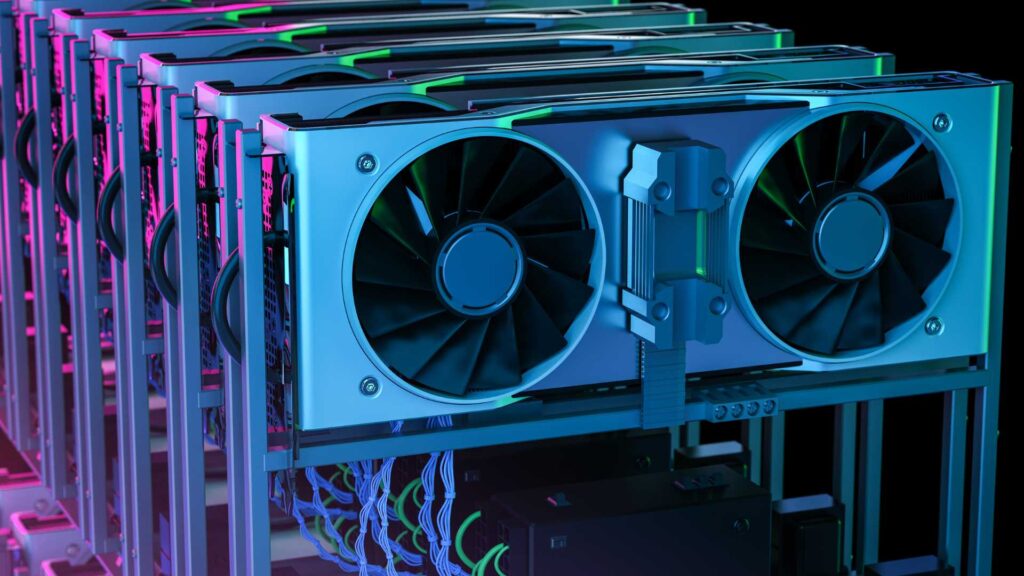
Engineers today are beginning to design chips tailored to specific AI workloads. This trend, known as domain-specific hardware, shows how Computer Engineering shifts from building general-purpose machines to task-optimized processors. These architectural foundations are critical because different types of artificial intelligence, ranging from simple reactive systems to the more advanced ‘agentic’ models, require unique balances of energy efficiency and computational throughput. By tackling these bottlenecks at the circuit level, engineers ensure that the hardware can support the complex logic and memory demands of modern intelligence, moving far beyond the flashy headlines of simple chatbot.
While processors receive much of the attention, AI systems are often constrained by how data is moved, not how fast it is computed. Computer engineers are addressing this challenge by reimagining memory hierarchies. Techniques like High Bandwidth Memory (HBM), Processing-In-Memory (PIM), and non-volatile storage-class memory reflect the silent but radical innovations happening beneath the surface.

In practice, the question is simple: Can AI models access their required data fast enough without wasting energy? This is where Computer Engineering transforms theory into reality. For instance, moving data consumes orders of magnitude more energy than arithmetic operations, meaning that minimizing movement is just as important as increasing processor speed. AI’s future scalability hinges on such reconfigurations of memory and storage systems.
Another underexplored domain is how Computer Engineering enables AI at the edge; smartphones, wearables, vehicles, and sensors. The edge is fundamentally different from cloud computing: power is limited, bandwidth is variable, and devices must often make real-time decisions. Engineers here are crafting ultra-low-power circuits, lightweight accelerators, and compact architectures that allow AI to escape the data center and embed itself in everyday environments.
For example, real-time medical monitoring systems or autonomous drones cannot rely on constant cloud connectivity. Instead, they depend on optimized chips with specialized energy-efficient designs. This reveals a hidden truth: many AI breakthroughs in healthcare, agriculture, or defense are less about better algorithms and more about the hardware ingenuity of Computer Engineering.
AI is often portrayed as infallible, but the reality is that large-scale AI systems face significant reliability issues. Hardware faults, soft errors in memory, or thermal instabilities can distort the outcomes of sensitive computations. Computer Engineering addresses these issues by embedding fault tolerance at both the architecture and system level.
Error-correcting codes, redundant processing paths, and adaptive thermal management ensure that AI does not collapse under its own computational intensity. This is particularly crucial in domains like self-driving cars or medical diagnostics, where a single undetected fault could lead to catastrophic consequences. Thus, the discipline contributes not just to performance, but to the very trustworthiness of AI deployments.
A less-discussed yet fascinating frontier is neuromorphic computing, where computer engineers attempt to replicate the brain’s efficiency in silicon. Unlike conventional processors, neuromorphic chips operate using spikes and parallel distributed structures, resembling the firing of biological neurons. Computer Engineering here is not about faster arithmetic but about fundamentally rethinking how intelligence itself is embodied in hardware.
This shift is profound: rather than forcing algorithms onto rigid Von Neumann architectures, engineers are redesigning machines to resemble the biological substrate of intelligence. It suggests that future AI may not just be about bigger models but about architectures that inherently mirror the brain’s adaptability, fault tolerance, and low energy consumption.
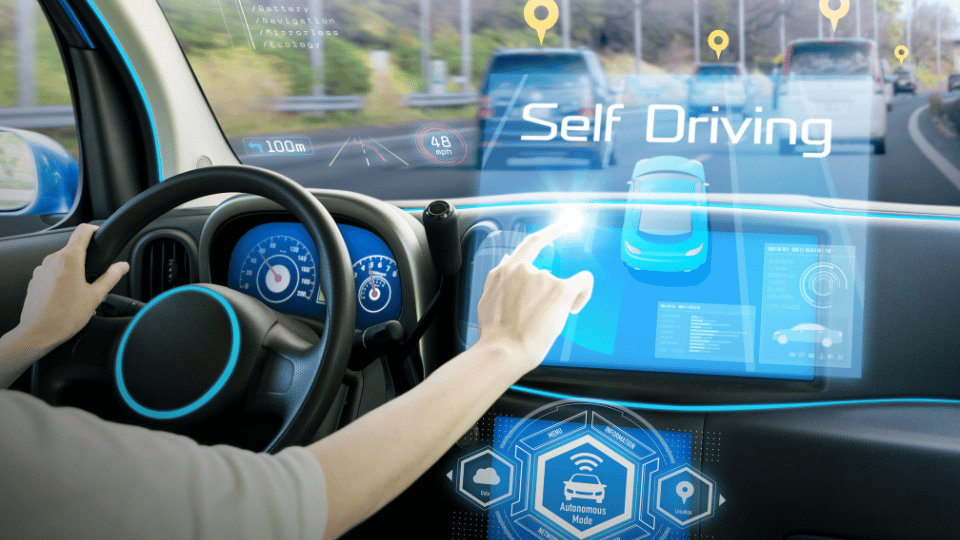
While AI-driven robots, autonomous vehicles, and industrial systems receive media coverage, what remains underexplored is the engineering required to keep these systems safe. Computer Engineering here blends with control systems, embedded systems, and real-time computing. The challenge is not merely executing an algorithm but ensuring that it integrates seamlessly with sensors, actuators, and unpredictable physical environments.
For instance, an autonomous vehicle must process massive sensor inputs, execute AI decisions, and apply mechanical control within milliseconds. Computer engineers design the synchronization, timing guarantees, and fail-safe mechanisms that prevent disasters. Without these silent guardians of system integration, AI’s leap into the physical world would remain dangerously unreliable.
AI ethics is usually framed as a matter of algorithms or regulations. But there is a growing recognition that ethical principles can also be enforced at the hardware level. Computer Engineering contributes to this by embedding security primitives, privacy-preserving mechanisms, and bias-mitigation features directly into systems.
For example, trusted execution environments and hardware-level encryption ensure that sensitive AI computations remain secure even if higher-level software is compromised. Similarly, energy-aware designs reflect a new ethical imperative: reducing the environmental footprint of large-scale AI training. By addressing these concerns at the architectural layer, engineers expand the conversation about ethics from theory to tangible design.
AI’s rise is transforming not just technology but the identity of computer engineers themselves. The traditional boundary between software specialists and hardware experts is blurring. A new generation of engineers must understand both low-level transistor physics and high-level machine learning frameworks. Universities are increasingly redesigning curricula where Computer Engineering is no longer a separate silo but an integrated field aligned with AI, robotics, and data-centric design.
This interdisciplinary approach is rarely highlighted in public discourse, yet it is shaping the future workforce. Tomorrow’s engineers are expected to optimize neural network architectures while simultaneously accounting for thermal dissipation on silicon, a hybrid skill set unique to this era.
Another less-covered perspective is the geopolitical dimension. While much of AI discourse centers on algorithms, nations are investing heavily in semiconductor sovereignty. Computer Engineering thus becomes a strategic tool, not just a technical discipline. Countries that control fabrication plants, chip design expertise, and supply chains effectively hold the keys to AI dominance.
This geopolitical reality underscores why AI cannot be understood solely as a software race. Without the infrastructure of advanced semiconductors, AI innovation remains tethered to foreign supply chains. For developing nations, investing in local Computer Engineering expertise is becoming as critical as cultivating data science talent.
As AI evolves, the relationship with Computer Engineering becomes increasingly symbiotic. Future directions may include quantum-enhanced AI accelerators, biologically inspired chips, and cross-layer co-design where algorithms and circuits evolve in tandem. The discipline ensures that AI is not just smarter but also faster, more reliable, and energy conscious.
Ultimately, the age of artificial intelligence is fundamentally the age of computer engineering. The silent work of engineers determines how far and how responsibly AI can scale to meet human needs. While public fascination often centers on the high-level performance debates found in the latest comparison of Gemini 3.0 vs GPT-5, the foundational story remains written in transistors, circuits, and architectures. It is at this hardware-software intersection where the future of intelligence is being engineered, literally, one chip at a time.