In the rapidly evolving landscape of artificial intelligence, OpenAI’s ChatGPT has consistently stood out as a leader in conversational AI technology. With the anticipated release of GPT-5 model, enthusiasts and professionals alike are eager to explore the advancements that this new iteration promises.
GPT-5 represents a significant leap forward in the evolution of conversational AI, building upon the strengths of its predecessors while introducing a host of new capabilities. This latest iteration is designed to not only process information and generate relevant text but also to understand the underlying logic of problems, enabling it to analyze data more effectively.
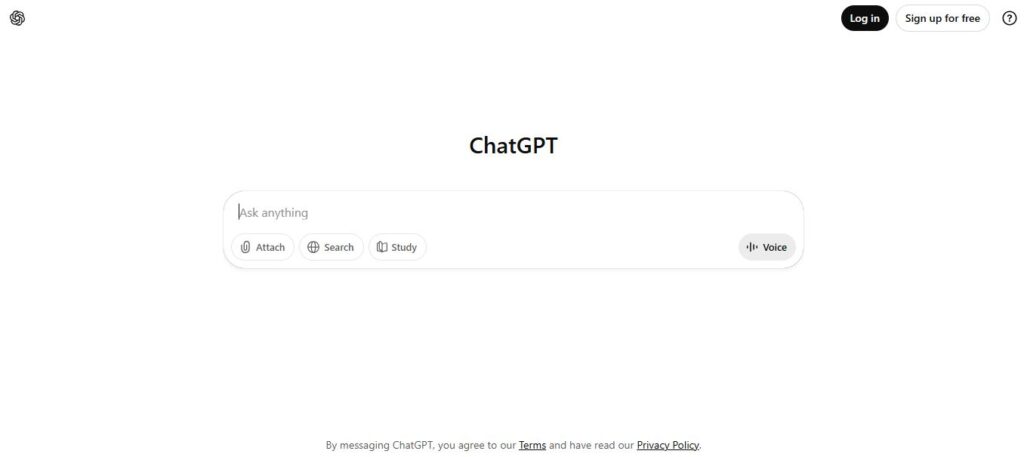
With its advanced reasoning model, ChatGPT-5 can provide more logical solutions, making it a powerful tool for users seeking assistance in various tasks. As the new default for all logged-in users, ChatGPT-5 aims to streamline the process of obtaining answers, finding inspiration, and boosting productivity, making it an indispensable resource for both casual users and professionals alike.
ChatGPT-5 was officially released to the public on August 7, 2025, marking a significant milestone in the history of GPT models by OpenAI. This release was highly anticipated, especially following the introduction of its predecessor, GPT-4, which debuted on March 14, 2023. The 28-month gap between these two releases highlights the extensive research and development that went into enhancing the capabilities of the new model.
GPT-5 is not just an incremental upgrade; it embodies a comprehensive evolution in reasoning, comprehension, and creativity.
One of the standout features of ChatGPT-5 is its advanced reasoning capabilities, which now operate at a level comparable to that of a PhD expert. In this version, GPT-5 automatically shifts from a model picker to a task-first assistant that routes requests based on your needs, automatically switching between a fast mode for quick answers and a deeper reasoning mode when a query requires more analysis.

Users can even prompt the AI to ‘Think hard about this,’ triggering its advanced reasoning engine for intricate problem-solving. The model’s ability to process information and generate responses has been refined, resulting in a notable reduction in error rates, reportedly up to 80% lower than its predecessors.

Another standout improvements is the unified multimodality capability, allowing the model to process and generate content from various data types simultaneously. ChatGPT-5 enable users to combine text with images and audio in the same session. This helps with problem solving that needs diagrams, screenshots, or recordings. The model keeps track of context more reliably than prior versions.

The new model can now handle up to 256k tokens, which allows it to maintain context over longer conversations and manage entire project discussions seamlessly. With this enhanced memory, ChatGPT-5 can provide more coherent and contextually relevant responses.
One of the most exciting advancements in ChatGPT-5 is the introduction of AI agents, which significantly enhance the model’s functionality and user experience. These agents represent a transition toward more proactive types of artificial intelligence, designed to perform specific tasks such :

Here’s a quick side-by-side look at GPT-5 and GPT-4 to show the practical differences. It highlights changes in reasoning, multimodality, long-context stability, assistant behavior, agent tools, and the overall UI/UX.
| Area | GPT-4 | GPT-5 |
|---|---|---|
| Reasoning | Strong general reasoning | Deeper multi-step reasoning and better consistency |
| Multimodality | Text, images (GPT-4V) | Text, images, audio in a more unified flow |
| Context handling | Good, sometimes brittle over long sessions | More stable across longer, multi-file or multi-turn work |
| Assistant behavior | Manual model selection common | Task-first routing reduces manual switching |
| Agents & tools | Browsing and code only in certain modes | Broader agent-like flows for common tasks |
| UI & UX | Functional, less guided | Cleaner UI, quick retry, clearer mode hints |
ChatGPT-5 has been designed to cater to a wide range of users, offering both free and paid access options. The free tier allows users to experience the capabilities of GPT-5, albeit with certain limitations.
Free users can send one GPT-5 Thinking message per day, which provides a taste of the advanced features but restricts deeper engagement due to tighter caps on messaging and fewer deep-reasoning runs. This makes it an excellent option for casual users or those who want to explore the AI’s potential without any financial commitment.
For those seeking more extensive access, OpenAI offers a subscription plan known as ChatGPT Plus, priced at $20 per month. This plan significantly enhances the user experience by allowing up to 160 messages every three hours, providing a more robust interaction with the model.
Additionally, there is a premium tier, ChatGPT Pro, which is available for $200 per month, granting users access to GPT-5 Pro and even more extensive capabilities. This tier is ideal for professionals and businesses that require high-volume usage and advanced features, making it a worthwhile investment for those who rely heavily on AI for productivity and creativity.
In conclusion, the enhanced capabilities, new features, and improved memory functions of ChatGPT-5 offer users a more intuitive and engaging experience than ever before. For those seeking a powerful conversational partner, ChatGPT-5 is undoubtedly a compelling choice, but it is crucial to remain informed about its evolving landscape. The future of AI conversations is bright, and ChatGPT-5 is at the forefront of this exciting journey.